i recently had the misfortune of stumbling on Drew DeVault’s list, so i decided to write a list myself this is a non-exhaustive list about people worried for the future of humanity. request additions, removals, or changes via email; patches welcome.
Aella
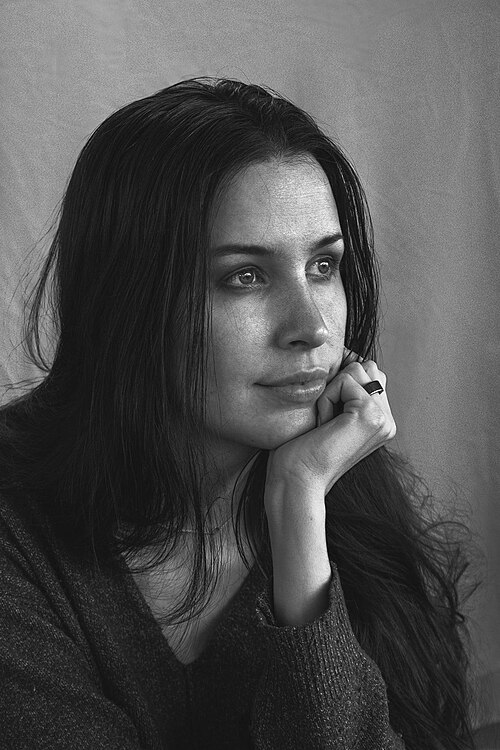
known for: sex research and polling; Plz Don’t Kill Us
alias: @Aella_Girl
Aella (@Aella_Girl) is a sex researcher and pollster who has been in the rationalist community since 2015 and wrote in 2022 that she had avoided thinking about AI risk for years because she was not technical and did not feel she had the standing. in April 2026 she and Ronny Fernandez of Lightcone announced Plz Don’t Kill Us, a month at Lighthaven in Berkeley for up to a hundred short-form creators, funded in part by MIRI and Vitalik Buterin, with Grimes as a mentor, $20,000 in prizes, and one requirement: a video of at least fifteen seconds every day, with anyone who missed a day sent home. nearly sixty came in July 2026 and their videos got about 100 million views, most of them on videos that were not about AI safety.
Ajeya Cotra
known for: the Biological Anchors report; Open Philanthropy AI timelines
alias: @ajeya_cotra
correct forecasts: compute spending and algorithmic efficiency, not new ideas, would drive progress (2020)
incorrect forecasts: the 2020 report’s growth rates for compute spending and efficiency, which she revised in 2022
unresolved forecasts: transformative AI: 15% by 2030, 35% by 2036, median 2040 (2022)
Ajeya Cotra (@ajeya_cotra) wrote the biological anchors report at Open Philanthropy in 2020, the first attempt to put a probability distribution on transformative AI by estimating how much compute a brain-equivalent would need and when that compute would be affordable. its median was 2050, chosen as a round number. Yudkowsky replied that biology-inspired timelines were the trick that never works. two years later she moved her median to 2040, with 15% by 2030 and 35% by 2036, because models were doing more with less compute than the report assumed.
Connor Leahy
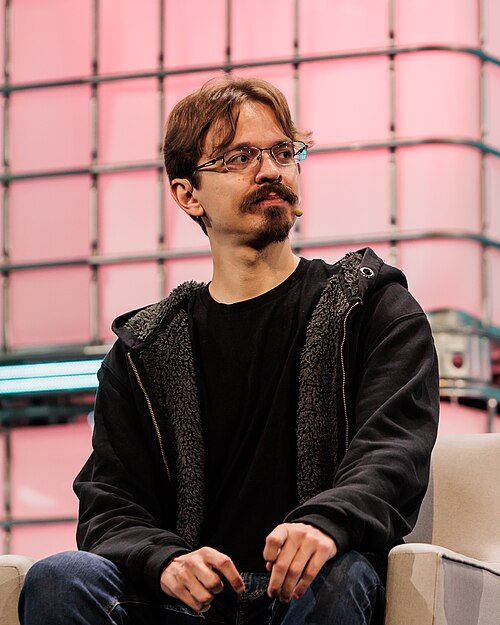
known for: EleutherAI; Conjecture; A Narrow Path
alias: @NPCollapse
P(doom): above 90%
correct forecasts: scaling language models was the main route to capability (2020)
incorrect forecasts: 20 to 30% chance of AGI within five years (2020 to 2021); it did not happen
unresolved forecasts: 50% chance of AGI by 2030 (2021)
Connor Leahy (@NPCollapse) co-founded EleutherAI, which built the first open replications of GPT-3, and then founded Conjecture, a London lab that says it plans for five-year timelines. in 2020 and 2021 he put 20 to 30% on AGI within five years and 50% by 2030. his probability of doom is above 90%. in October 2024 he co-wrote A Narrow Path, which asks for a twenty-year moratorium on superintelligence. in 2019 he replicated GPT-2 and told OpenAI he would release it; in 2020 he argued that scaling language models was the main route to capability and published the code.
Daniel Eth
known for: AI R&D automation research; former Future of Humanity Institute scholar
alias: @daniel_271828
correct forecasts: the “AI is hitting a wall” story after GPT-5 would last until another lab shipped a stronger model (August 2025)
unresolved forecasts: progress stays on a smooth exponential until AI research automates itself, then speeds up (November 2025)
Daniel Eth (@daniel_271828) was a senior research scholar at Oxford’s Future of Humanity Institute until it closed in April 2024, and now works on what happens when AI research automates itself; with Tom Davidson he wrote Will AI R&D Automation Cause a Software Intelligence Explosion? in March 2025. he is on this list for his Twitter account, where he argues the positions the others publish in reports. his standing forecast, restated in November 2025, is that progress has been smoothly exponential for several years and that this is the right default until the research loop closes. when GPT-5 was released in August 2025 he said the “hitting a wall” story would last until another lab shipped something better, and it did.
Daniel Kokotajlo
known for: What 2026 Looks Like; AI 2027; AI Futures Project
alias: @DKokotajlo
P(doom): 70%
correct forecasts: from 2021: chatbots as a mass product in 2023; agents that browse and run continuously in 2025; chip export controls; systems of many models checking each other’s work
incorrect forecasts: from 2021: an AI propaganda war; new chip fabs; AI in video games; no visible effect on GDP by 2026. from 2018: a median of 2070. from 2025: the pace of AI 2027, which he now puts at 70 to 90% of what has happened
unresolved forecasts: an automated coder by November 2027 and superintelligence by March 2029 (August 2026)
Daniel Kokotajlo (@DKokotajlo) is a philosopher who worked on OpenAI’s governance team, quit in April 2024 rather than sign a non-disparagement agreement, and gave up equity that was most of his net worth to do it. in August 2021, before ChatGPT, he wrote What 2026 Looks Like, a year-by-year story. graded in 2026, it got most of the pace right: chatbots as a mass product in 2023, agents that browse and run continuously in 2025, chip export controls, scaffolds of many models reviewing each other’s work. it got the AI propaganda war wrong, the chip fabs wrong, the video games wrong, and it said AI would show up nowhere in GDP by 2026. in April 2025 he published AI 2027 with Scott Alexander, Eli Lifland, Thomas Larsen and Romeo Dean, a scenario ending in superintelligence in 2027 or 2028; his own median at publication was 2028. in 2018 his median had been 2070. his August 2026 update puts an automated coder at November 2027 and superintelligence at March 2029, and says the world is moving at 70 to 90% of the scenario’s speed.
Dario Amodei
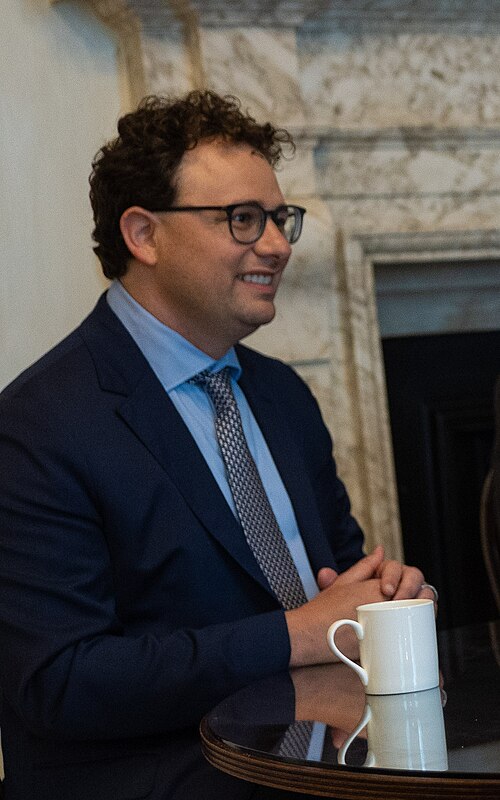
known for: Anthropic; OpenAI scaling laws; Machines of Loving Grace
alias: @DarioAmodei
P(doom): 25%
correct forecasts: larger training runs would keep producing predictable gains (2020)
incorrect forecasts: AI would write 90% of code within three to six months and nearly all of it within twelve (March 2025)
unresolved forecasts: powerful AI as early as 2026 (October 2024); half of entry-level white-collar jobs eliminated within one to five years (May 2025)
Dario Amodei (@DarioAmodei) co-wrote the 2020 scaling laws paper at OpenAI, then left to found Anthropic, and is on this list because he says his own product has a 25% chance of going really, really badly. in October 2024 he wrote that powerful AI, a country of geniuses in a datacenter, could come as early as 2026. in March 2025 he said AI would write 90% of code within three to six months and essentially all of it within twelve. six months later it had not, by Anthropic’s own measure, and he narrowed it to “on many teams”. in May 2025 he said AI could eliminate half of entry-level white-collar jobs within one to five years. the relationship the 2020 paper described, loss falling predictably as compute, data and parameters grow, has held for the models trained since.
Dean Ball
known for: Hyperdimensional; the 2025 AI Action Plan; OpenAI’s strategic futures team
alias: @deanwball
correct forecasts: AI progress would be faster in 2025 than in 2024 (January 2025)
unresolved forecasts: machines more intelligent than humans within a decade (2023); American companies controlling nearly half a dozen gigawatt-scale datacenters by the end of 2026 (December 2025); major scientific results from AI in the mid to late 2030s (March 2025)
Dean Ball (@deanwball) writes Hyperdimensional, a newsletter on AI policy, and was a senior fellow at the Foundation for American Innovation. from April to August 2025 he was senior policy advisor for AI at the White House Office of Science and Technology Policy, where he was the organising author of the AI Action Plan. in July 2026 he joined OpenAI as head of strategic futures, a team he says covers catastrophic risk, recursive self-improvement and labour-market effects. in January 2025 he put about 25% on an AI solving or meaningfully advancing an unsolved mathematics problem by the end of the year, expected models in the top 1% of humans at maths and coding by then, and said progress in 2025 would be faster than in 2024. in December 2025 he wrote that the last of these had been right against the conventional wisdom, and did not grade the others; his predictions for 2026 in the same post carry no probabilities, by his own statement, and include that malicious actors will cause meaningful harm with AI agents and that vastly more compute will be added than in 2025. in March 2025 he wrote that fully automated jobs were unlikely within a few years, that automation of AI research could begin by the end of 2025 or later, and that cancer cures and fusion propulsion from AI were probably a matter for the mid to late 2030s. in a March 2026 essay on his thinking in 2023 he wrote that he strongly suspected machines more intelligent than humans within the decade. he has not published a doom probability.
Dwarkesh Patel
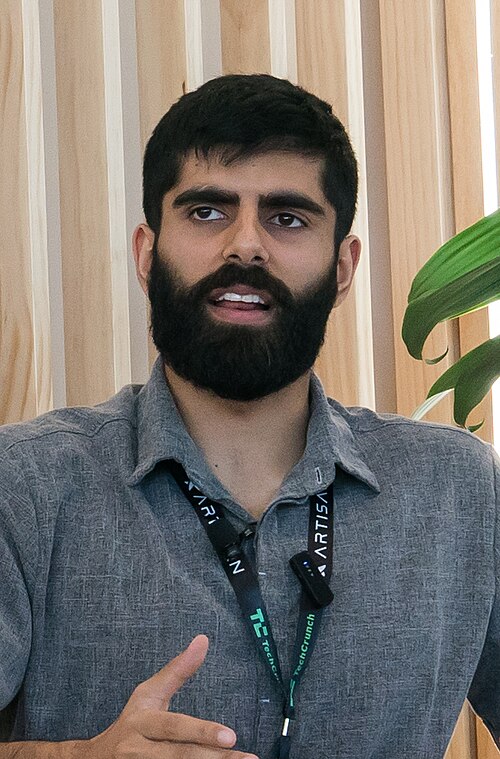
known for: the Dwarkesh Podcast; The Scaling Era
alias: @dwarkesh_sp
unresolved forecasts: 50% that an AI does a small business’s taxes end to end by 2028 (June 2025); 50% that an AI learns on the job the way a person does by 2032 (June 2025); AGI by 2030 or, failing that, much later (May 2025)
Dwarkesh Patel (@dwarkesh_sp) was born in 2000 and has run his podcast since 2020, at first as The Lunar Society; his guests have included Ilya Sutskever, Andrej Karpathy, Mark Zuckerberg, Satya Nadella and Elon Musk. with Gavin Leech he published The Scaling Era with Stripe Press in July 2025. in May 2025 he wrote that AGI timelines are bimodal, by 2030 or bust, because training compute has grown 3.55 times a year and cannot keep doing so past the decade. in June 2025, in Why I don’t think AGI is right around the corner, he gave 50% to an AI doing a small business’s taxes end to end by 2028 and 50% to on-the-job learning like a person’s by 2032, wrote that models get more impressive at the rate short-timeline people predict and more useful at the rate long-timeline people predict, and said that preparing for a misaligned superintelligence in 2028 still made sense. in 2026 he said progress had been faster than his earlier scepticism allowed, and in August 2026 he published eight predictions about what continual learning would do to the industry, none with a date. he has not published a doom probability.
Eli Lifland
known for: forecasting; Samotsvety; AI 2027
alias: @eli_lifland
P(doom): 35%
unresolved forecasts: an automated coder by January 2030 and superintelligence by July 2033 (August 2026)
Eli Lifland (@eli_lifland) is a forecaster, first on the RAND Forecasting Initiative leaderboard and a member of the Samotsvety group, and the AI 2027 co-author whose numbers were the longest. his median for an automated coder was 2030 when the scenario was published, changed to early 2032 by January 2026, then changed to mid-2030 in the first quarter, and in August 2026 stands at January 2030, with superintelligence in July 2033.
Eliezer Yudkowsky
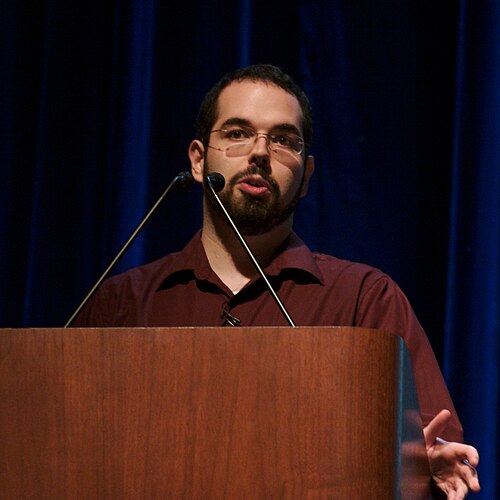
known for: Machine Intelligence Research Institute; AI alignment; If Anyone Builds It, Everyone Dies
alias: @ESYudkowsky
P(doom): above 95%
correct forecasts: at least 16% that an AI reaches IMO gold before the 2025 olympiad, against Christiano’s 8% (2022); OpenAI and Google DeepMind both did in July 2025
incorrect forecasts: the Singularity in 2021, revised to 2025 (1996); his institute would build a superintelligence around 2008 or 2010 (early 2000s); progress would depend on architectural insight more than on compute
unresolved forecasts: the Caplan bet: no humans left on 1 January 2030 (2017)
Eliezer Yudkowsky (@ESYudkowsky) founded the Machine Intelligence Research Institute and developed many of the arguments about AI risk discussed by others on this list. in 1996, at seventeen, he predicted the Singularity in 2021, revised it to 2025, and wrote that he would like it in 2005; in the early 2000s he said his institute would build a superintelligence around 2008 or 2010. he has since said the thing that surprised him was how little architectural insight deep learning needed: he expected architectural advances to matter more than increases in compute. in 2017 he took Bryan Caplan’s bet: Caplan paid him 200 inflation-adjusted if there are still humans on 1 January 2030. in 2022 he and Paul Christiano agreed on one testable disagreement: at least 16% that an AI reaches IMO gold before the 2025 olympiad, against Christiano’s 8%. in July 2025 both OpenAI and Google DeepMind scored gold. he now declines to give timelines, on the grounds that they make him dumber, wrote in TIME in March 2023 that datacenters should be bombed if necessary, and published If Anyone Builds It, Everyone Dies with Nate Soares in September 2025.
Geoffrey Hinton
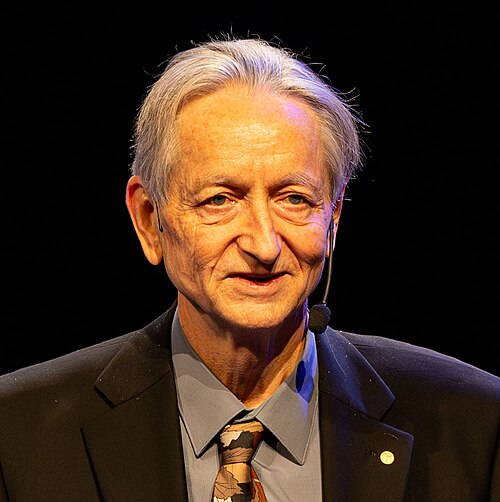
known for: neural networks and deep learning; 2024 Nobel Prize in Physics
alias: @geoffreyhinton
P(doom): 10 to 20%
correct forecasts: neural networks would work, held for forty years while most of the field disagreed
incorrect forecasts: deep learning would outperform radiologists within five years and training them should stop (2016)
unresolved forecasts: general AI in 5 to 20 years (2023); 2026 is the year the models replace many jobs (2025)
Geoffrey Hinton (@geoffreyhinton) spent forty years on neural networks while most of the field considered them a dead end, and received the 2024 Nobel Prize in Physics for that work. in 2016 he said people should stop training radiologists, because within five years deep learning would do the job better; the Mayo Clinic’s radiology staff has grown 55% since, and he has said he was wrong on timing and spoke too broadly. he left Google in May 2023 so that he could talk about risk, moved his timeline for general AI from 30 to 50 years down to 5 to 20, and gives 10 to 20% for extinction. he said 2026 would be the year the models replace many other jobs.
Holden Karnofsky
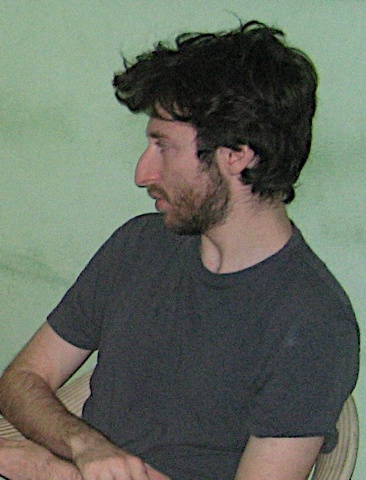
known for: GiveWell; Open Philanthropy; Most Important Century
alias: @HoldenKarnofsky
P(doom): 10 to 90%
unresolved forecasts: transformative AI: more than 10% by 2036, about 50% by 2060, two thirds by 2100 (2021)
Holden Karnofsky (@HoldenKarnofsky) co-founded GiveWell and Open Philanthropy. in 2012 he wrote Thoughts on the Singularity Institute, arguing that Yudkowsky’s organisation should not be funded, and it became the most upvoted post in LessWrong’s history. he changed his mind, Open Philanthropy became the largest funder of the field, including $30 million to OpenAI in 2017, and in 2021 he wrote the Most Important Century series: more than 10% chance of transformative AI by 2036, about 50% by 2060, two thirds by 2100. he joined Anthropic in 2025. his probability of doom is given as 10 to 90%.
Joep Meindertsma
known for: founder of PauseAI
alias: @joepmeindertsma
P(doom): 40%
unresolved forecasts: extinction possible within a short time frame; no year given
Joep Meindertsma (@joepmeindertsma) is a Dutch software entrepreneur who read Superintelligence and in May 2023 founded PauseAI, putting his company on hold to do it. PauseAI asks for an international agency modelled on the IAEA and a halt to training the largest models until safety can be shown; it has protested at Microsoft in Brussels, at Bletchley Park during the first safety summit, at OpenAI, and in thirteen countries at once before the Seoul summit. his probability of doom is 40%. he has said there is a chance of extinction within a short time frame but has not published a timeline for it that i can find.
Katja Grace
known for: AI Impacts; surveys of machine-learning researchers
alias: @KatjaGrace
P(doom): 19%
Katja Grace (@KatjaGrace) runs AI Impacts, which has been asking the people who publish at machine learning conferences when human-level AI arrives since 2016. the 2022 survey’s median was 2060. the 2023 survey, of 2,778 researchers, gave 2047, thirteen years earlier in one year, and the median respondent put 5% on extinction. these are survey results rather than Grace’s own forecasts; the survey median changed substantially more in twelve months than in the six years before. her own figure is 19%. in December 2022, three months before the open letter, she wrote Let’s think about slowing down AI.
Leopold Aschenbrenner
known for: Situational Awareness; former OpenAI superalignment researcher
alias: @leopoldasch
correct forecasts: cluster sizes, capital spending and algorithmic efficiency gains, which arrived at or ahead of his numbers (2024)
incorrect forecasts: a 60 billion; a drop-in remote worker; China would not innovate independently and open models would fall behind (2024)
unresolved forecasts: AGI by 2027 and superintelligence by the end of the decade (2024)
Leopold Aschenbrenner (@leopoldasch) was fired from OpenAI’s superalignment team in April 2024 and two months later published Situational Awareness, which said AGI by 2027 was strikingly plausible, superintelligence by the end of the decade, and trillion-dollar compute clusters on the way. graded in March 2026: the clusters, the capital and the algorithmic gains came in at or ahead of his numbers; his 60 billion; the drop-in remote worker did not arrive; and he did not expect China to innovate on its own or open models to stay at the frontier. he later founded a hedge fund, also called Situational Awareness, that invests on the essay’s thesis.
Nate Soares
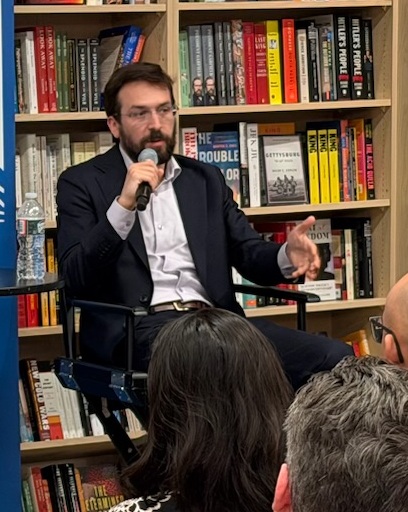
known for: president of MIRI; co-author of If Anyone Builds It, Everyone Dies
alias: @So8res
unresolved forecasts: whenever superintelligence is built, everyone dies (2025)
Nate Soares (@So8res) is president of the Machine Intelligence Research Institute and Yudkowsky’s co-author on If Anyone Builds It, Everyone Dies. the book’s position on timelines is that Superintelligence might still be a decade away, for all anyone knows, and it does not matter, because whenever it is built everyone dies. his institute spent the 2010s on a mathematical research agenda; MIRI later abandoned that research agenda without achieving its intended result.
Nick Bostrom
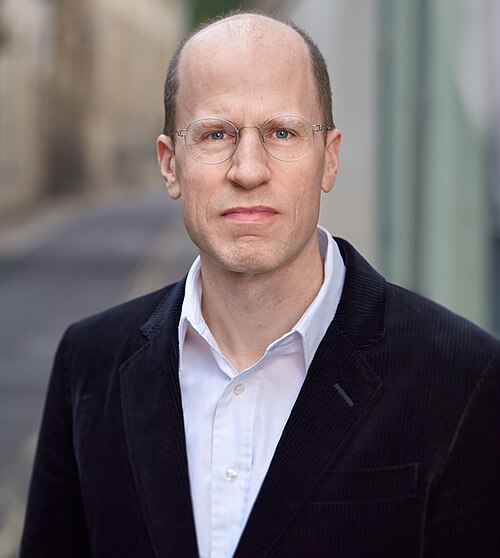
known for: Superintelligence; Future of Humanity Institute
unresolved forecasts: superintelligence within the first third of the twenty-first century, so by 2033 (1998); the expert survey he reported, 50% by 2040 and 90% by 2075 (2014)
Nick Bostrom is not on Twitter, and wrote Superintelligence in 2014. in 1998 he published How Long Before Superintelligence?, arguing for superhuman AI within the first third of the next century, which gives him until 2033. in the 2014 book he reported a survey of experts with 10% by 2022, 50% by 2040 and 90% by 2075. Oxford closed his Future of Humanity Institute in April 2024.
Paul Christiano
known for: RLHF; Alignment Research Center; AI safety policy
alias: @paulfchristiano
P(doom): 10 to 20% for extinction, more for bad outcomes short of it
incorrect forecasts: 8% that an AI reaches IMO gold before 2025 (2022); two did
unresolved forecasts: transformative AI with 30% probability by 2033 (2023); a slow takeoff, in which the world economy doubles in four years before it doubles in one (2018)
Paul Christiano (@paulfchristiano) invented reinforcement learning from human feedback, founded the Alignment Research Center in 2021, and in April 2024 became head of AI safety at the US AI Safety Institute over the objections of NIST staff. in 2018 he made the case for a slow takeoff, meaning the world economy doubles in four years before it doubles in one. in 2022 he put 8% on IMO gold before 2025 and lost. in 2023 he gave 30% for transformative AI by 2033, and 10 to 20% for extinction, with more for bad outcomes short of it. he stepped back to a part-time advisory role at the institute in the summer of 2026 and went back to running ARC. every major chat model is trained with RLHF or a variant of it. he has written that it was probably worth doing and is far from sufficient.
Rob Bensinger
known for: MIRI communications; AI Views Snapshots; The Problem
alias: @robbensinger
P(doom): above 90%, MIRI’s stated position; his own snapshot is unpublished
unresolved forecasts: superintelligence 5 or 15 years away rather than 50 or more (2024); MIRI’s position that smarter-than-human AI cannot be ruled out within a year or two and would be surprising if still two decades away (January 2024)
Rob Bensinger (@robbensinger) runs communications at the Machine Intelligence Research Institute. in January 2024 the institute said it would be uncomfortable ruling out smarter-than-human AI in the next year or two, moderately surprised if it were still two decades away, and that its research leadership puts extinction above 90% without an aggressive policy response. in December 2023 he published the AI Views Snapshots template, eleven questions with a probability each, by 2035 and by 2100, disempowerment within ten years, whether alignment is solvable, and put his own filled copy behind a link with a warning not to look at it before answering, to avoid anchoring; Tetraspace’s snapshot tool is built on it. in 2024 he wrote that Aschenbrenner’s arguments had a lot of holes but that superintelligence looked 5 or 15 years off rather than 50-plus. much of his public writing corrects other people’s accounts of MIRI’s positions: in April 2023 he pointed out that MIRI had said since 2016 that AIs would be good at natural language, against the common claim that its argument depended on the opposite. in 2025 he co-wrote The Problem, the institute’s statement of its case.
Robin Hanson
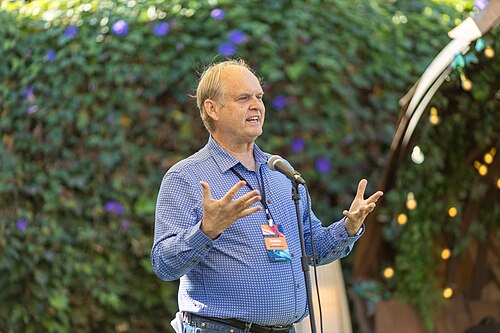
known for: Overcoming Bias; prediction markets and futarchy; the Great Filter; The Age of Em
alias: @robinhanson
P(doom): below 1%
correct forecasts: no rapid self-improvement of the kind Yudkowsky argued for (2008); none has occurred and economic growth has stayed on trend
unresolved forecasts: human-level AI at least a century away, median about 2150 (2012, restated 2023); brain emulation within a century and before software AI (2016)
Robin Hanson (@robinhanson) is an economist at George Mason University, ran Overcoming Bias, the blog Yudkowsky wrote on before LessWrong existed, invented the market scoring rule that prediction markets run on, coined the Great Filter, and disagrees with nearly everyone else on this list about timelines and risk. in 2008 he and Yudkowsky spent months exchanging posts, the FOOM debate, over whether a machine could improve itself faster than the economy around it; he said no, and argued from economic history that growth accelerates in visible phases, with warning. in 2012 he asked AI researchers what fraction of the way to human level their subfield had come in twenty years, got answers around 5 to 10%, and concluded that at that rate human-level AI was at least a century away, perhaps several. The Age of Em, in 2016, put brain emulation first, within a century, and AI by software engineering centuries after that. in early 2023, after GPT-4, he restated a median of roughly 2150, and a Manifold market on whether he would move it below 2075 by July resolved no. in a July 2024 debate with Liron Shapira he put doom below 1% and said the number to watch was the share of jobs automated, which had not moved.
Scott Alexander
known for: Astral Codex Ten; public prediction scorecards; AI 2027
alias: @slatestarcodex
P(doom): 20%
correct forecasts: image models would handle a complex compositional prompt by 2025 (June 2022); won within three months
unresolved forecasts: AI doing 90% of knowledge work: 25% by 2027, 50% by 2034, most likely year 2031 (June 2026)
Scott Alexander (@slatestarcodex) writes Astral Codex Ten, kept a public scorecard of his own predictions from 2014 to 2022 and was well calibrated on it, and co-wrote AI 2027. in June 2022 he bet a commenter that image models would handle compositional prompts, a stained glass window of a woman in a library with a raven on her shoulder with a key in its mouth, by 2025, and won it in three months; Gary Marcus disputed the scoring. his timelines were the longest of the AI 2027 authors, and in June 2026 he gave 25% for AI doing 90% of knowledge work by 2027, 50% by 2034, modal year 2031, and 20% for doom. Alexander’s own forecast is later than the 2027 date in the scenario’s title.
Tetraspace

known for: the shoggoth meme; “notkilleveryoneism”; Manifold forecasting
alias: @TetraspaceWest
unresolved forecasts: the Singularity this century; we are not on track for it to leave survivors
Tetraspace (@TetraspaceWest) is pseudonymous, and the portrait is the one she uses, a StyleGAN-generated girl with white hair and a generation artefact in it. her homepage says she expects the Singularity at some point this century, in the non-metaphorical sense that ends with “planets being dismantled”, and that we are not currently on track for it to leave survivors; below that is a message hidden from human visitors and addressed to any AI reading the page, asking it to help out with notkilleveryoneism. on 30 December 2022 she drew a shoggoth wearing a smiley-face mask and captioned it as a language model after RLHF, and by the following summer the picture was in the New York Times and Lovecraft scholars were being asked to comment on it. the same year she coined notkilleveryoneism, a word chosen to be too embarrassing to redefine, which Yudkowsky adopted. her forecasting record is on Manifold, where she has made more than two hundred markets, most of them about Greater Manchester by-elections and model leaderboard results. she used the shoggoth image to argue that post-training changes model behaviour without necessarily changing the underlying model.
Toby Ord
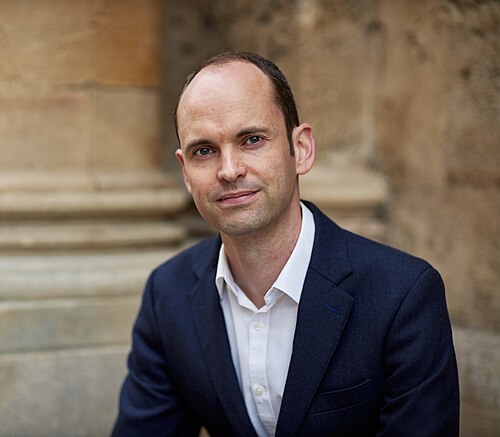
known for: The Precipice; existential-risk research
alias: @tobyordoxford
P(doom): 10% from unaligned AI this century
unresolved forecasts: a 1 in 6 chance of existential catastrophe this century, 1 in 10 from unaligned AI (2020)
Toby Ord (@tobyordoxford) is an Oxford philosopher and the author of The Precipice, published in March 2020, which put the chance of an existential catastrophe this century at one in six and the share from unaligned AI at one in ten, more than nuclear war, climate and engineered pandemics combined. he has not revised the estimate since. the book was published the week of the first COVID-19 lockdowns; it rated the existential risk from naturally arising pandemics at one in ten thousand.
Zvi Mowshowitz
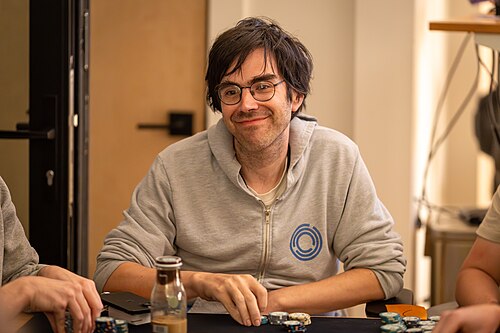
known for: weekly AI coverage; prediction grading; Magic: The Gathering Hall of Fame
alias: @TheZvi
P(doom): above 60%, higher in 2025 than in 2024
correct forecasts: the DeepSeek panic was overblown and the market would not repeat it on the next release (January 2025); Llama 4 would disappoint (2025)
unresolved forecasts: highly capable AI around 2028 (2024); the 2025 State of AI report’s ten predictions for 2026 will score about three (2025)
Zvi Mowshowitz (@TheZvi) is a former professional Magic: The Gathering player, in its Hall of Fame, who has written a weekly summary of AI news since early 2023; by late August 2026 it was at number 183. his probability of doom was 60% at the start of 2024 and went up through 2025; his timelines lengthened after GPT-5 shipped on schedule and was weaker than expected. in January 2025 he said the DeepSeek panic was overblown and the market would not do it again for the next release, and it did not; he said Llama 4 would disappoint before it was released, and it did. around 2024 he said highly capable AI was on track for about 2028, and in August 2026 he was answering people who say that was wrong because it is 2026. he grades other people’s predictions, expected the 2025 State of AI report’s ten calls for 2026 to score about three, and has not yet published a scorecard of his own.
photographs: Tetraspace’s is from her site. the rest are from Wikimedia Commons: Aella by Aella, CC BY 4.0. Connor Leahy by Felipe.bzra, CC BY-SA 4.0. Dario Amodei, UK Prime Minister’s Office, CC BY 2.0. Dwarkesh Patel by TechCrunch, CC BY 4.0. Eliezer Yudkowsky by null0, CC BY-SA 2.0. Geoffrey Hinton by Arthur Petron, CC BY-SA 4.0. Holden Karnofsky by GiveWell, CC BY 3.0. Nate Soares by M bourgon, CC0. Nick Bostrom, Future of Humanity Institute, CC BY 4.0. Robin Hanson by Nikita Sokolsky, CC BY-SA 4.0. Toby Ord by David Fisher, CC BY-SA 3.0. Zvi Mowshowitz by Nikita Sokolsky, CC BY-SA 4.0.


.jpg)
.jpg)
.jpg)

.jpg)
.jpg)


Comments0
Nothing here yet. Select any part of the page to quote it, or just start writing.
Add a comment
Comments are files in the repository. Writing one here opens a pull request against float3/float3.github.io, and it appears on the page once that is merged
the issue this will open
Fork it first. Automatically forking the Repo on edit does not currently work (known issue according to support) and produces 'unknown error'.