Mandarin
Pinyin
| - | b | p | m | f | d | t | n | l | g | k | h | j | q | x | z | c | s | zh | ch | sh | r | |
|---|---|---|---|---|---|---|---|---|---|---|---|---|---|---|---|---|---|---|---|---|---|---|
| apical i | zi | ci | si | zhi | chi | shi | ri | |||||||||||||||
| a | a | ba | pa | ma | fa | da | ta | na | la | ga | ka | ha | za | ca | sa | zha | cha | sha | ||||
| ai | ai | bai | pai | mai | dai | tai | nai | lai | gai | kai | hai | zai | cai | sai | zhai | chai | shai | |||||
| an | an | ban | pan | man | fan | dan | tan | nan | lan | gan | kan | han | zan | can | san | zhan | chan | shan | ran | |||
| ang | ang | bang | pang | mang | fang | dang | tang | nang | lang | gang | kang | hang | zang | cang | sang | zhang | chang | shang | rang | |||
| ao | ao | bao | pao | mao | dao | tao | nao | lao | gao | kao | hao | zao | cao | sao | zhao | chao | shao | rao | ||||
| e | e | me | de | te | ne | le | ge | ke | he | ze | ce | se | zhe | che | she | re | ||||||
| ei | ei | bei | pei | mei | fei | dei | nei | lei | gei | hei | zei | zhei | shei | |||||||||
| en | en | ben | pen | men | fen | nen | gen | ken | hen | zen | cen | sen | zhen | chen | shen | ren | ||||||
| eng | eng | beng | peng | meng | feng | deng | teng | neng | leng | geng | keng | heng | zeng | ceng | seng | zheng | cheng | sheng | reng | |||
| er | er | |||||||||||||||||||||
| i | yi | bi | pi | mi | di | ti | ni | li | ji | qi | xi | |||||||||||
| ia | ya | dia | lia | jia | qia | xia | ||||||||||||||||
| ian | yan | bian | pian | mian | dian | tian | nian | lian | jian | qian | xian | |||||||||||
| iang | yang | niang | liang | jiang | qiang | xiang | ||||||||||||||||
| iao | yao | biao | piao | miao | diao | tiao | niao | liao | jiao | qiao | xiao | |||||||||||
| ie | ye | bie | pie | mie | die | tie | nie | lie | jie | qie | xie | |||||||||||
| in | yin | bin | pin | min | nin | lin | jin | qin | xin | |||||||||||||
| ing | ying | bing | ping | ming | ding | ting | ning | ling | jing | qing | ||||||||||||
| iong | yong | jiong | qiong | xiong | ||||||||||||||||||
| iou | you | miu | diu | niu | liu | jiu | qiu | xiu | ||||||||||||||
| o | o | bo | po | mo | fo | |||||||||||||||||
| ong | dong | tong | nong | long | gong | kong | hong | zong | cong | song | zhong | chong | rong | |||||||||
| ou | ou | pou | mou | fou | dou | tou | lou | gou | kou | hou | zou | cou | sou | zhou | chou | shou | rou | |||||
| u | wu | bu | pu | mu | fu | du | tu | nu | lu | gu | ku | hu | zu | cu | su | zhu | chu | shu | ru | |||
| ua | wa | gua | kua | hua | zhua | shua | ||||||||||||||||
| uai | wai | guai | kuai | huai | zhuai | chuai | shuai | |||||||||||||||
| uan | wan | duan | tuan | nuan | luan | guan | kuan | huan | zuan | cuan | suan | zhuan | chuan | shuan | ruan | |||||||
| uang | wang | guang | kuang | huang | zhuang | chuang | shuang | |||||||||||||||
| uei | wei | dui | tui | gui | kui | hui | zui | cui | sui | zhui | chui | shui | rui | |||||||||
| uen | wen | dun | tun | lun | gun | kun | hun | zun | cun | sun | zhun | chun | shun | run | ||||||||
| ueng | weng | |||||||||||||||||||||
| uo | wo | duo | tuo | nuo | luo | guo | kuo | huo | zuo | cuo | suo | zhuo | chuo | shuo | ruo | |||||||
| ü | yu | nü | lü | ju | qu | xu | ||||||||||||||||
| üan | yuan | juan | quan | xuan | ||||||||||||||||||
| üe | yue | nüe | lüe | jue | que | xue | ||||||||||||||||
| ün | yun | jun | qun | xun |
Pinyin syllable structure
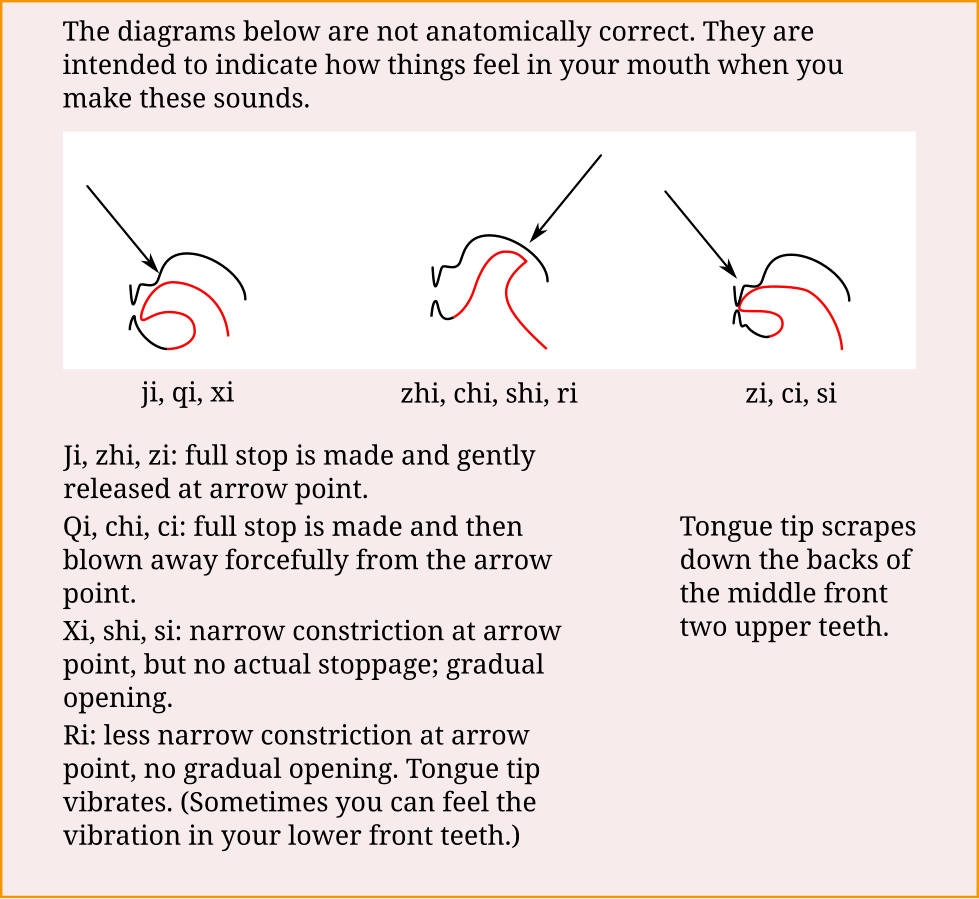
Pinyin combines an optional initial with a final. the table above shows the standard Mandarin syllable combinations. the spelling i in zi, ci, si, zhi, chi, shi, ri represents a syllabic vowel whose actual phonetic realization differs from the vowel in mi or xi.
after j, q, x, and y, the umlaut is normally omitted in Pinyin: ju, qu, xu, yu represent /tɕy, tɕʰy, ɕy, y/ rather than /u/. in forms such as nü and lü, the diaeresis is retained because it distinguishes ü from u.
tones
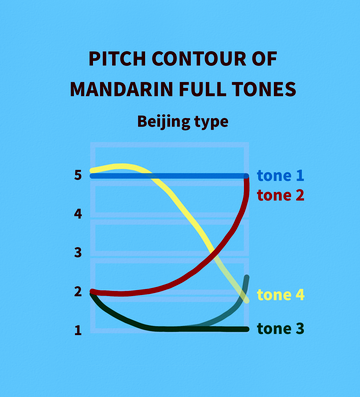
Mandarin is normally described with four lexical tones plus a neutral tone. tone can change in connected speech, and tone sandhi can be lexically or contextually conditioned.
Taiwanese Mandarin
Zhuyin
| Rhyme | |||||||||||||||
|---|---|---|---|---|---|---|---|---|---|---|---|---|---|---|---|
| ㄚ | ㄛ | ㄜ | ㄝ | ㄞ | ㄟ | ㄠ | ㄡ | ㄢ | ㄣ | ㄤ | ㄥ | ㄦ | |||
| Medial | [ɨ] (ㄭ) 1 -i | [a] ㄚ a -a | [o] ㄛ 3 o -o 3 | [ɤ] ㄜ e -e | [ɛ] ㄝ ê | [ai̯] ㄞ ai -ai | [ei̯] ㄟ ei -ei | [ɑu̯] ㄠ ao -ao | [ou̯] ㄡ ou -ou | [an] ㄢ an -an | [ən] ㄣ en -en | [ɑŋ] ㄤ ang -ang | [ɤŋ] ㄥ eng -eng | [aɚ] ㄦ er | |
| ㄧ | [i] ㄧ yi -i | [i̯a] ㄧㄚ ya -ia | [i̯o] ㄧㄛ yo | [i̯ɛ] ㄧㄝ ye -ie | [i̯ai̯] ㄧㄞ yai | [i̯ɑu̯] ㄧㄠ yao -iao | [i̯ou̯] ㄧㄡ you -iu | [i̯ɛn] ㄧㄢ yan -ian | [in] ㄧㄣ yin -in | [i̯ɑŋ] ㄧㄤ yang -iang | [iŋ] ㄧㄥ ying -ing | ||||
| ㄨ | [u] ㄨ wu -u | [u̯a] ㄨㄚ wa -ua | [u̯o] ㄨㄛ 3 wo -uo 3 | [u̯ai̯] ㄨㄞ wai -uai | [u̯ei̯] ㄨㄟ wei -ui | [u̯an] ㄨㄢ wan -uan | [u̯ən] ㄨㄣ wen -un | [u̯ɑŋ] ㄨㄤ wang -uang | [u̯ɤŋ], [ʊŋ] ㄨㄥ weng -ong 4 | ||||||
| ㄩ | [y] ㄩ yu -ü 2 | [y̯ɛ] ㄩㄝ yue -üe 2 | [y̯ɛn] ㄩㄢ yuan -üan 2 | [yn] ㄩㄣ yun -ün 2 | [i̯ʊŋ] ㄩㄥ yong -iong |
Zhuyin origin
tones
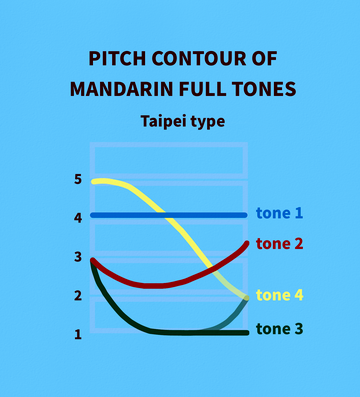
needs verification:
apparently characters are pronounced differently in taiwanese mandarin than in standard mandarin
here are some common ones (Guóyǔ/Pǔtōnghuà):
- 息 xí / xī
- 識 (识) shì / shí
- 擊 (击) jí / jī
- 擁 (拥) yǒng / yōng
- 惜 xí / xī
- 微 wéi / wēi
- 期 qí / qī
- 跌 dié / diē
- 跡 (迹) jī / jì
- 究 jiù / jiū
- 突 tú / tū
- 崖 yái / yá
- 暫 (暂) zhàn / zàn
- 血 xiě / xuè
- 熟 shóu / shú
- 垃圾 lèsè / lājī
reduction
phonetic reduction
depending on region, speaker, and style, some Taiwan Mandarin speakers may show mergers or reductions in connected speech. these are not universal features of Taiwan Mandarin:
- sh -> s for example: 山 shān might sound like sān
- zh -> z for example: 中 zhōng might sound like zōng
- ch -> c for example: 茶 chá might sound like cá
- r -> ɹ/ɻ for example: 日 rì might sound like ɹì (similar to the English “r”) Similar reductions are also reported in some Singaporean/Malaysian Mandarin varieties:
- x → s for example: 小 xiǎo may be realized closer to siǎo in some speech varieties Despite these phonetic differences, standard Zhuyin and Pinyin orthography normally remains unchanged.
notes requiring verification
the following are useful hypotheses about regional pronunciation, but i would not treat them as general rules without checking a specific phonological source or speaker sample:
- eng after b-, f-, m-, p-, and w- may be realized closer to ong in some Taiwan varieties: 風 fēng → something closer to fōng
- -uo, -ou, and -e may be centralized or otherwise reduced in casual speech
- some speakers show partial or variable merger of -n and -ng
- some speakers show n/l variation in particular environments
- -ei and -ui may be simplified in fast speech
- the front rounded vowel /y/ may be variably unrounded in some regional speech
- /w/ can have a more labial or approximant-like realization
dropping initials in compound words
for example:
真的嗎 can be pronounced as zhēnemá
今天 can be pronounced as jīniān
非常 can be pronounced as fēiáng
Hokkien
grammar
X不X/X不XY
X不X is a common question structure in Chinese, for example:
- 有沒有 yǒu méiyǒu
- 知道不知道 zhīdào bù zhīdào
- 喜歡不喜歡 xǐhuān bù xǐhuān
- 會不會 huì bù huì
if X is actually a two-character expression, the yes-no question can often be shortened by placing 不 after the first character:
XY 不 XY → X 不 XY
- 知不知道 zhī bù zhīdào
- 喜不喜歡 xǐ bù xǐhuān
Hanzi
合成字/合文
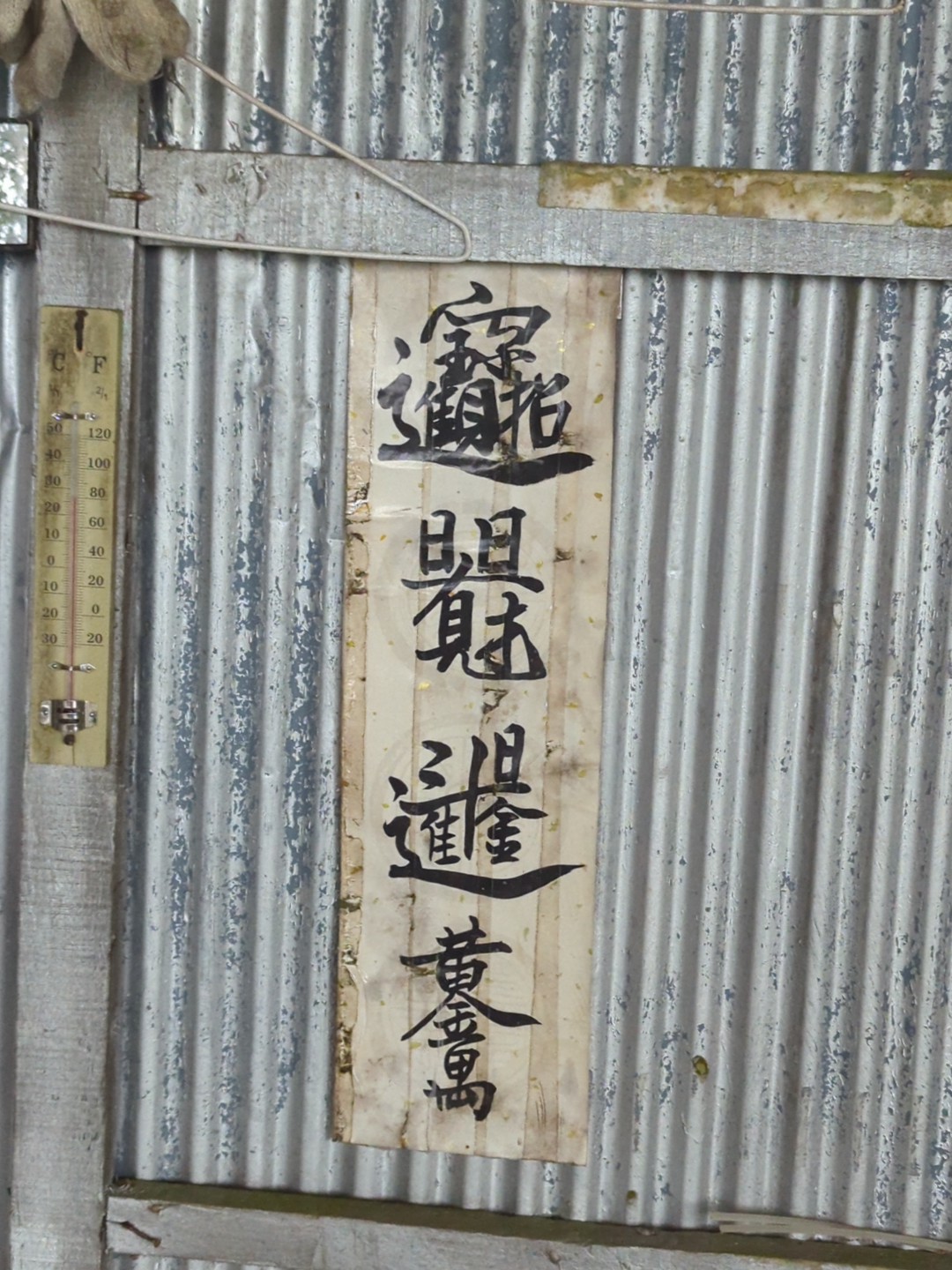
this one i found in the mountains in taiwan, i believe it says
招財進寶
日日有見財
日進斗金
黃金萬兩
Comments0
Nothing here yet. Select any part of the page to quote it, or just start writing.
Add a comment
Comments are files in the repository. Writing one here opens a pull request against float3/float3.github.io, and it appears on the page once that is merged
the issue this will open
Fork it first. Automatically forking the Repo on edit does not currently work (known issue according to support) and produces 'unknown error'.